
A Tecnam P2006T owner has until the earlier of 25 flight hours or 30 days after October 13, 2026, to have both ailerons' hinges and cotter pins looked at closely. FAA Airworthiness Directive 2026-19-06 requires it, after an aileron hinge pin on one P2006T worked loose.
What happened
The European Union Aviation Safety Agency's AD 2026-0124, dated July 1, 2026, reports that the left aileron of a P2006T partly detached. The hinge pin of the outboard hinge was missing. The investigation found the pin could have migrated out of the hinge because a cotter pin was missing or broken, which let the two halves of the outboard hinge separate. By design, a cotter pin is installed at each end of every hinge pin to hold it in place.
When other airplanes were checked, two more had broken or improperly installed cotter pins, and some aileron hinges were cracked. The FAA's own words on the risk: a migrated hinge pin, if not found and corrected, could lead to detachment of an aileron and possibly loss of control. In explaining why the directive took effect without prior comment, the FAA calls it a single-point failure with the potential for a catastrophic event.
Which airplanes
- Tecnam Model P2006T, certificated in any category, serial numbers 001 through 434 and serial number 442.
- EASA's directive also covers the P2006T NG. The FAA's does not, because that model has no FAA type certificate.
- The FAA estimates 102 airplanes of U.S. registry are affected.
What the directive requires
- Paragraph (g)(1): within 25 flight hours or 30 days after October 13, 2026, whichever comes first, a one-time detailed visual inspection of the inboard and outboard hinges of both ailerons for damage, which the directive describes as cracks, warping of the hinges or hinge pin, scratched paint, a missing or broken torque stripe and the like; and of the cotter pins at both ends of each hinge pin for improper installation and looseness. The work is done per steps 4 and 5 of Tecnam Service Bulletin SB 995-CS-Ed. 1 Rev. 2, dated September 18, 2026.
- Paragraph (g)(2): if nothing is found, nothing more is required.
- Paragraph (g)(3): a discrepant cotter pin is replaced and secured before further flight, per step 6 of the bulletin.
- Paragraph (g)(4): a cracked or damaged hinge needs approved corrective instructions from the FAA's International Validation Branch, EASA, or Tecnam's EASA Design Organization Approval (with its authorized signature) before further flight.
- Paragraph (h): the bulletin asks for a report to Tecnam; the directive does not require it.
- Paragraph (i): an inspection done earlier under Revision 0 (April 21, 2026) or Revision 1 (August 25, 2026) of the bulletin counts.
The FAA estimates one work-hour for the inspection, and one work-hour plus $1 in parts for each cotter pin that needs replacing. It has no figure for hinge repairs. Comments are accepted until November 12, 2026, under Docket No. FAA-2026-11784.
Sources
- FAA, AD 2026-19-06, Costruzioni Aeronautiche Tecnam S.p.A. Airplanes, Federal Register, September 28, 2026 (91 FR 61120), Docket No. FAA-2026-11784. Read October 16, 2026.
- Tecnam Service Bulletin SB 995-CS-Ed. 1 Rev. 2, September 18, 2026, as described in the directive. Tecnam's document; not reproduced here. It is in the docket at regulations.gov and from Tecnam.
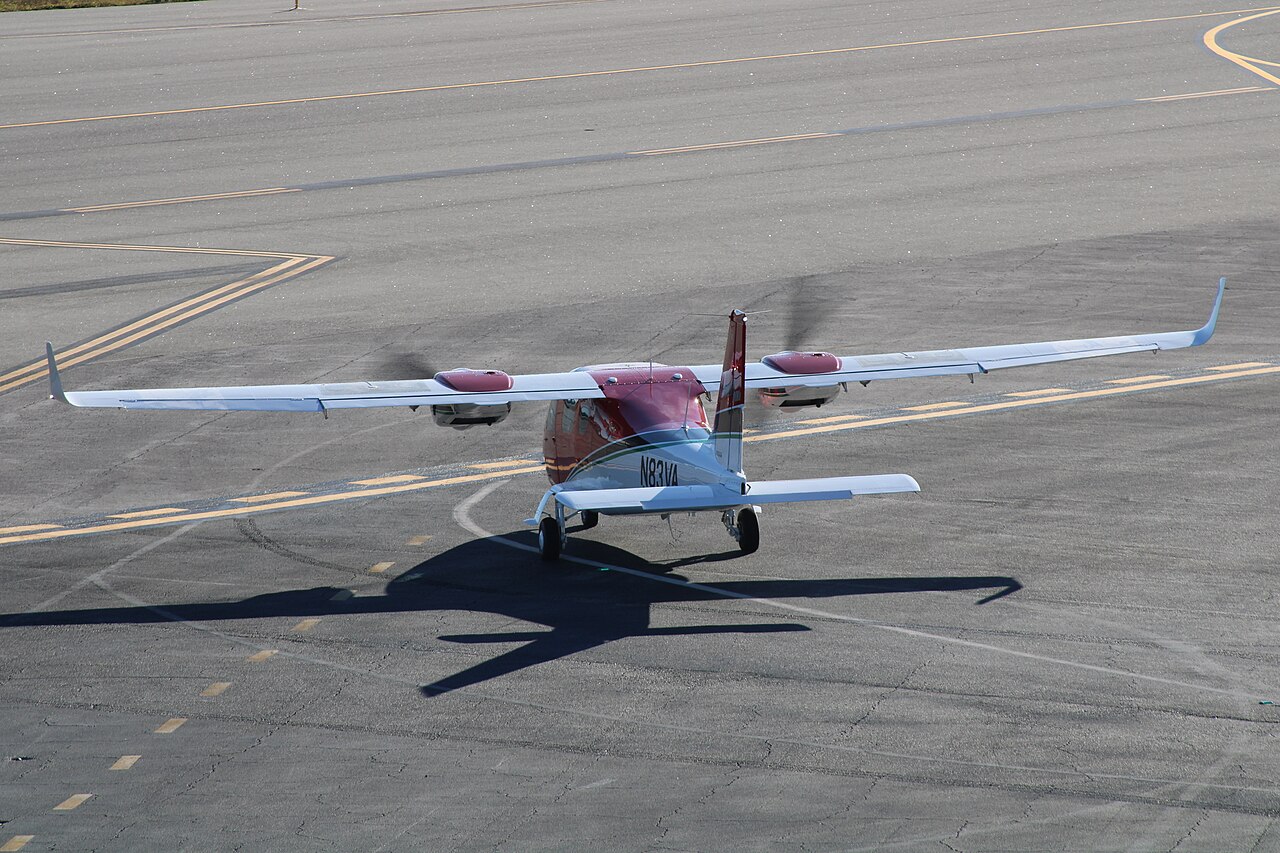
- Photo: Tecnam P2006T (N83VA, cn 360-US)_(1-17-2023).jpg) by ZLEA, Wikimedia Commons, CC BY-SA 4.0.