
Every owner of a certificated airplane deals with two kinds of signature in the logbook: an A&P mechanic's and an IA's. They aren't interchangeable, and the difference decides who can sign the annual, who can approve a new panel installed under a field approval, and what a shop means when it says its IA is away until Tuesday. The rules are in 14 CFR part 65, subpart D, and they're shorter than most owners expect.
What an A&P may do
"A&P" is shorthand for a mechanic certificate with both ratings the FAA issues, airframe and powerplant (14 CFR 65.73). A mechanic can hold either one alone.
Under 14 CFR 65.81, a mechanic may perform or supervise maintenance, preventive maintenance and alterations on whatever the rating covers. Two things are carved out for everyone: major repairs and major alterations of propellers, and any repair or alteration of instruments. Instrument work goes to a repair station.
The same section adds two limits that matter in a small shop. A mechanic may not supervise a job, or approve it for return to service, without having done that kind of work before, unless the mechanic shows the ability to the FAA or does it under the direct supervision of someone experienced in that operation. And a mechanic must understand the manufacturer's current instructions and maintenance manuals for the job. 14 CFR 65.83 adds a currency rule: at least six months of work as a mechanic, or supervising mechanics or maintenance, within the past 24 months, or an FAA finding of ability.
Signing the work off is in 65.85 for the airframe rating and 65.87 for the powerplant rating. A mechanic may approve for return to service what the mechanic has performed, supervised or inspected, except major repairs and major alterations. A mechanic may also do the 100-hour inspection and approve the airplane for return to service. The 100-hour inspection is the one 14 CFR 91.409(b) requires of an airplane carrying passengers for hire or used for flight instruction for hire when the instructor provides it.
Light-sport airplanes have their own line since the FAA's MOSAIC amendments of July 24, 2025. For a special light-sport airplane whose products aren't produced under an FAA approval, a mechanic may approve a major repair or major alteration for return to service when the manufacturer, or a person acceptable to the FAA, authorized it and wrote the instructions it was done to (65.85(b) and 65.87(b)).
A mechanic certificate doesn't expire. Under 14 CFR 65.15, it stays in effect until surrendered, suspended or revoked. 65.89 says the mechanic keeps it in the area where the work is normally done.
What the IA adds
The inspection authorization isn't a rating on the certificate. It's a separate authorization that an A&P applies for, and it adds two privileges under 14 CFR 65.95:
- Major repairs and major alterations. An IA may inspect one and approve the airplane for return to service, if the work was done to technical data the FAA approved. The A&P who did the work signs as the person who performed it; the IA signs the approval. Part 43 appendix B has the paperwork: FAA Form 337, at least in duplicate, a signed copy to the owner, and a copy to the FAA Aircraft Registration Branch in Oklahoma City within 48 hours of the return to service.
- The annual inspection, and progressive inspections. 91.409(a) requires an annual every 12 calendar months, approved for return to service by a person authorized by 43.7. An IA does it. A progressive inspection program under 91.409(d) also needs an IA, a certificated airframe repair station or the airplane's manufacturer to supervise or conduct it.
The rule turns a 100-hour into an annual only one way: a 100-hour inspection counts as the annual when the person doing it is authorized to do annuals and enters it in the records as an annual (91.409(a)).
An annual doesn't have to end in a signature that says airworthy. 14 CFR 43.11 gives the wording for both outcomes. If the airplane isn't approved, the entry says the inspection was done and that a list of discrepancies and unairworthy items, with its date, went to the owner. The inspector must give the owner that list, signed and dated, and placard any instrument or equipment that may stay inoperative under 91.213(d)(2). The items on the list are maintenance, and an A&P may do them and approve them for return to service, unless one of them is a major repair or major alteration.
How each is earned
The mechanic certificate (65.71 to 65.80): the applicant must be at least 18, read, write, speak and understand English, and pass every test within 24 months. The experience comes one of two ways under 65.77: a document from an aviation maintenance technician school certificated under part 147, or documented practical experience, at least 18 months for one rating or 30 months working on both at once. Then come a written test and an oral and practical test, each on the Aviation Mechanic General, Airframe and Powerplant Airman Certification Standards (65.75, 65.79).
A builder with years in the shop sometimes asks whether building counts as that practical experience. The rule says experience "with the procedures, practices, materials, tools, machine tools, and equipment generally used in constructing, maintaining, or altering airframes or powerplants," with evidence "satisfactory to the Administrator." Whether one person's build qualifies is the local Flight Standards office's call, so a builder should ask there before planning on it, and bring the build's records: dated work, photographs and parts, the sort of thing Hangar Flying's Builders Log keeps.
The inspection authorization (65.91): the applicant must hold both ratings, each in effect at least three years, and must have been actively engaged in maintaining certificated aircraft for the two years before applying. The applicant needs a fixed base of operations where the applicant can be found in person or by phone during a normal working week, though the inspections can be done elsewhere, and the equipment, facilities and inspection data to inspect properly. Then there's a written test on inspecting major repairs and alterations and doing annual and progressive inspections. An applicant who fails it waits at least 90 days to test again.
The IA's calendar
Every IA expires on March 31 of each odd-numbered year (65.92). The next is March 31, 2027. It also stops when the holder loses the fixed base or the equipment, facilities and data, and it can't be used without a currently effective A&P.
Renewal under 65.93 is done during March of the odd year at the responsible Flight Standards office, with evidence that the holder still meets the requirements. The holder must also complete one activity in each year of the two-year period:
- at least one annual inspection for each 90 days the authorization was held;
- at least two major repairs or major alterations for each 90 days;
- at least one progressive inspection, performed or supervised and approved;
- a refresher course acceptable to the FAA, at least 8 hours; or
- an oral test by an FAA inspector.
An IA who misses the first year's activity by March 31 may not use the authorization after that date until passing an oral test with an FAA inspector. For an owner, that's the practical side of the calendar: an IA who did few annuals this year may be in a refresher course this winter, and an annual scheduled for late March 2027 is worth confirming with the inspector ahead of time.
Experimental and light-sport airplanes
Part 43 doesn't apply to an airplane with an experimental airworthiness certificate unless it once held a different kind (14 CFR 43.1(b)), and 91.409(c)(1) takes experimental and special light-sport airplanes out of the annual and 100-hour rules. An amateur-built airplane gets a condition inspection instead, and its operating limitations say who may sign it. The typical wording in FAA Advisory Circular 65-23B names an A&P mechanic, not an IA. The primary builder with a repairman certificate can sign it as well, as Hangar Debrief explained on Nov. 2, and so can a light-sport repairman with an inspection rating once the limitations allow it (October's article).
An owner of an amateur-built airplane who also owns a certificated one needs both kinds of help: the A&P or the builder for the homebuilt's condition inspection, and an IA for the certificated airplane's annual. The records are separate as well. Hangar Flying's MRO keeps each aircraft's maintenance records and shows what is coming due.
Sources
All read November 10, 2026, in the eCFR as of November 6, 2026.
- 14 CFR part 65, subpart D, mechanics: 65.71 to 65.95, including the amendments of 90 FR 35218 (July 24, 2025) to 65.81, 65.85 and 65.87.
- 14 CFR 65.15, duration of certificates.
- 14 CFR 43.1, 43.7, 43.11 and part 43 appendix B.
- 14 CFR 91.409, inspections.
- FAA, Advisory Circular 65-23B, September 27, 2024, Appendix A, as read for Hangar Debrief's article of November 2, 2026.
- Hangar Debrief, The repairman certificate for an amateur-built airplane and Light-sport repairmen may now do condition inspections on amateur-built aircraft.
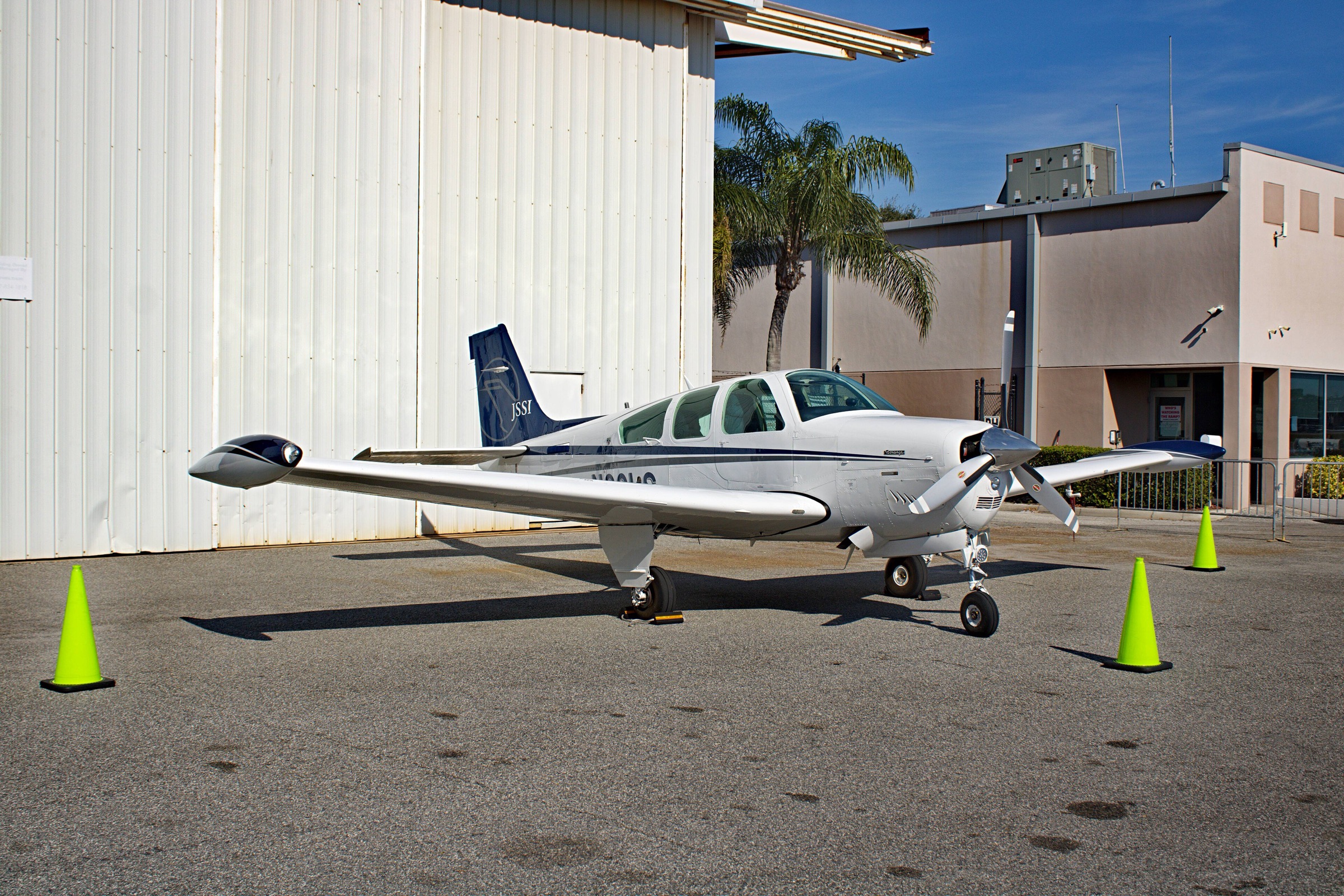
- Photo: Beechcraft F33A Bonanza (N89LS, cn CE-1583) (11-21-2025)_(11-21-2025).jpg) by ZLEA, Wikimedia Commons, CC BY-SA 4.0. FAA registry read November 10, 2026.