
A pilot flying a pressurized airplane above FL350 today must have one pilot at the controls wearing a sealed oxygen mask, unless two pilots with quick-donning masks are at the controls and the airplane is at or below FL410. The FAA has proposed to change that. Notice of Proposed Rulemaking 26-17, published in the Federal Register on September 24, 2026, would revise 14 CFR 91.211(b) and 135.89(b). Nothing has changed yet: this is a proposal, and comments are open until November 23, 2026.
The rule today
Under 14 CFR 91.211(b), as it reads in the eCFR on October 14, 2026, a civil aircraft of U.S. registry with a pressurized cabin:
- above FL250 must carry at least a 10-minute supply of supplemental oxygen for each occupant, for a descent after a loss of pressurization;
- above FL350 must have one pilot at the controls wearing and using a secured and sealed oxygen mask that supplies oxygen at all times or automatically above a cabin pressure altitude of 14,000 feet. The one exception: at or below FL410, with two pilots at the controls and each with a quick-donning mask that can be put on with one hand within 5 seconds, neither has to wear one;
- above FL350, if one pilot leaves the controls, the other must put on and use a mask until the first returns (paragraph (b)(2)).
What the FAA proposes for part 91
- The mask exception would no longer stop at FL410 and would no longer need two pilots. Above FL350, no pilot would have to wear a mask if each pilot has a quick-donning mask, at any altitude the aircraft is certified for.
- Without quick-donning masks, one pilot at the controls above FL350 would still have to wear and use one.
- Paragraph (b)(2), the rule for when one pilot leaves the controls, would be deleted.
- The 10-minute supply above FL250 stays.
- The word "airplane" would become "aircraft", and altitudes in feet MSL would be written as flight levels.
Paragraph (a) of 91.211, which sets oxygen use by cabin pressure altitude (above 12,500 feet for more than 30 minutes, above 14,000 feet for the crew at all times, above 15,000 feet for every occupant), is not part of the proposal. For an unpressurized airplane, nothing changes.
What it proposes for part 135
- With two pilots at the controls, the altitude above which one must wear a mask would rise from FL350 to FL410.
- With one pilot at the controls, the altitude would rise from FL250 to FL350, and the rule would say plainly that it applies when only one pilot is assigned to the flight, not only when a second pilot leaves the seat.
Why
Section 834 of the FAA Reauthorization Act of 2024 directed the FAA to propose the part 135 changes. The part 91 changes are the FAA's own addition. The notice gives its reasons: pressurization events in modern business aircraft at high altitude are rare; the same aircraft are often flown under either part; the change brings part 91 closer to the International Civil Aviation Organization's standards; and the FAA's "Safety Continuum" accepts more risk in general aviation than in commercial operations. It estimates an oxygen servicing costs between $100 and $400 a fill.
The notice also explains why it would not let a lone part 135 pilot go mask-free up to FL410. It cites the time of useful consciousness in AC 61-107B CHG 1, Aircraft Operations at Altitudes Above 25,000 Feet Mean Sea Level or Mach Numbers Greater Than .75: about 30 to 60 seconds at 35,000 feet, cut to 15 to 30 seconds in a rapid decompression, and 15 to 20 seconds at 40,000 feet.
How to comment
Comments go to regulations.gov under Docket No. FAA-2026-12145 by November 23, 2026. The FAA's contact for the part 91 changes is in the General Aviation and Commercial Division, AFS-800, as listed in the notice.
Sources
- FAA, Flight Operations: Pilot requirements; Use of oxygen, Notice No. 26-17, Federal Register, September 24, 2026 (91 FR 60530), Docket No. FAA-2026-12145. Read in full October 16, 2026.
- 14 CFR 91.211, Supplemental oxygen, eCFR, as of October 14, 2026. Read October 16, 2026.
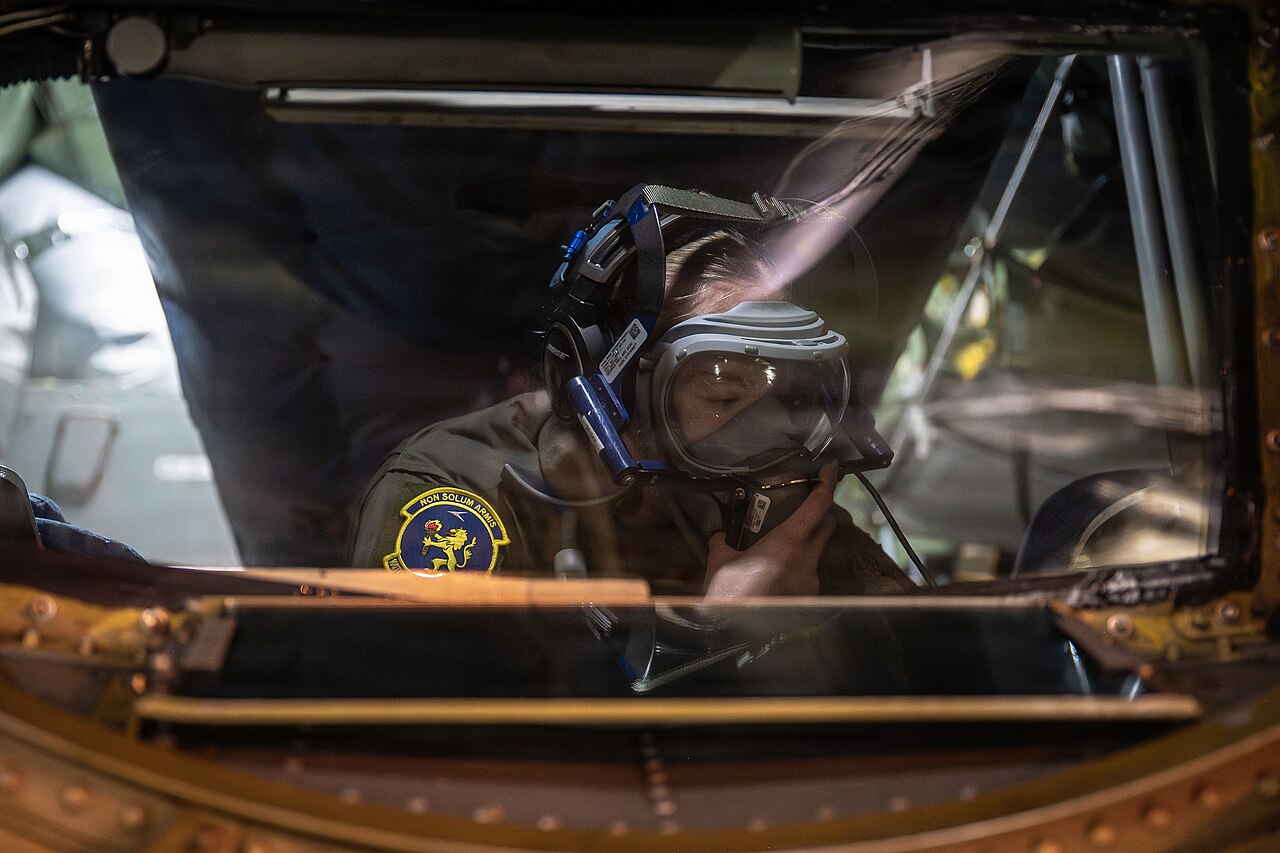
- Photo: 100 ARW fuels NATO allies.jpg), U.S. Air Force photo by Airman 1st Class Aidan Martinez Rosiere, via Wikimedia Commons, public domain (work of the U.S. federal government).