
The company that builds the PT6 has a new turboprop engine, and it showed it to the public with the type certificate already in hand. Pratt & Whitney Canada unveiled the PT9 on Oct. 21 in Las Vegas, during the National Business Aviation Association's convention. Its release calls the engine a "new centerline," meaning a new design and not another version of the PT6, and says it "was recently certified by Transport Canada."
No owner can buy an airplane with one yet. The company hasn't named an airframe, and most of the numbers an owner would ask for haven't been published.
What the company says
The release from RTX, Pratt & Whitney's parent, makes these claims:
- Power: 33% more power at altitude, "compared to previous generation engines."
- Fuel: fuel consumption reduced by 20%, against the same unnamed engines.
- Testing: more than 14,000 development hours.
- Certification: by Transport Canada. The release gives no date.
- Where it's built: Lethbridge, Alberta, which is also the company's center for the PT6 family.
The release describes a modular engine that "can be easily tailored to diverse airframe types" and says the design sets a foundation for "electric aircraft and hybrid thermal-electric powerplants." Satheeshkumar Kumarasingam, president of Pratt & Whitney Canada, called the PT9 "the next evolution of turboprop propulsion."
What the trade press reported from the unveiling
The release has no horsepower figure. Aviation International News, reporting from the convention, says the company places the engine in the 1,700- to 2,300-shaft-horsepower range, that the certified model is designated the PT9-11A, and that the certificate was awarded on Sept. 30. The same report says the PT9 keeps the PT6's 19-inch outer diameter and has an electronic engine control that combines the power, propeller and condition levers into one lever, as on the PT6E-67XP.
It also reports two things owners of PT6-powered airplanes will want to know. Kumarasingam said the PT9 is neither a replacement for the PT6 nor its successor, and that the company continues to invest in the PT6. And the company is pursuing FAA and European certification, with no date given.
These figures are the company's, as told to reporters. Hangar Debrief hasn't read Transport Canada's type certificate data sheet for the engine, and the company's own product page couldn't be opened for this article.
What isn't known
Neither the release nor the reporting names an airplane, a launch customer or a delivery date. The company hasn't published the engine's weight, its time between overhauls, its price, or which engines the 33% and 20% figures are measured against. Whether the FAA has an application in hand, and when it might act, hasn't been said.
At around 2,000 shaft horsepower the PT9 is an engine for a large single or a twin, not for a homebuilt. For the readers of this newsletter its interest is in what comes next: the airplanes that get it, and what a one-lever turbine costs to keep. Hangar Debrief's article on the FAA rule that lets single-engine turbine airplanes use a maker's inspection program covers how such airplanes are inspected under part 91.
Sources: RTX, "RTX's Pratt & Whitney Canada introduces certified PT9 engine," news release, Oct. 21, 2026; Kerry Lynch, "P&WC Unveils PT9 Engine with Type Certification in Hand," Aviation International News, Oct. 21, 2026, for the horsepower range, the model designation, the certification date and the company president's remarks.
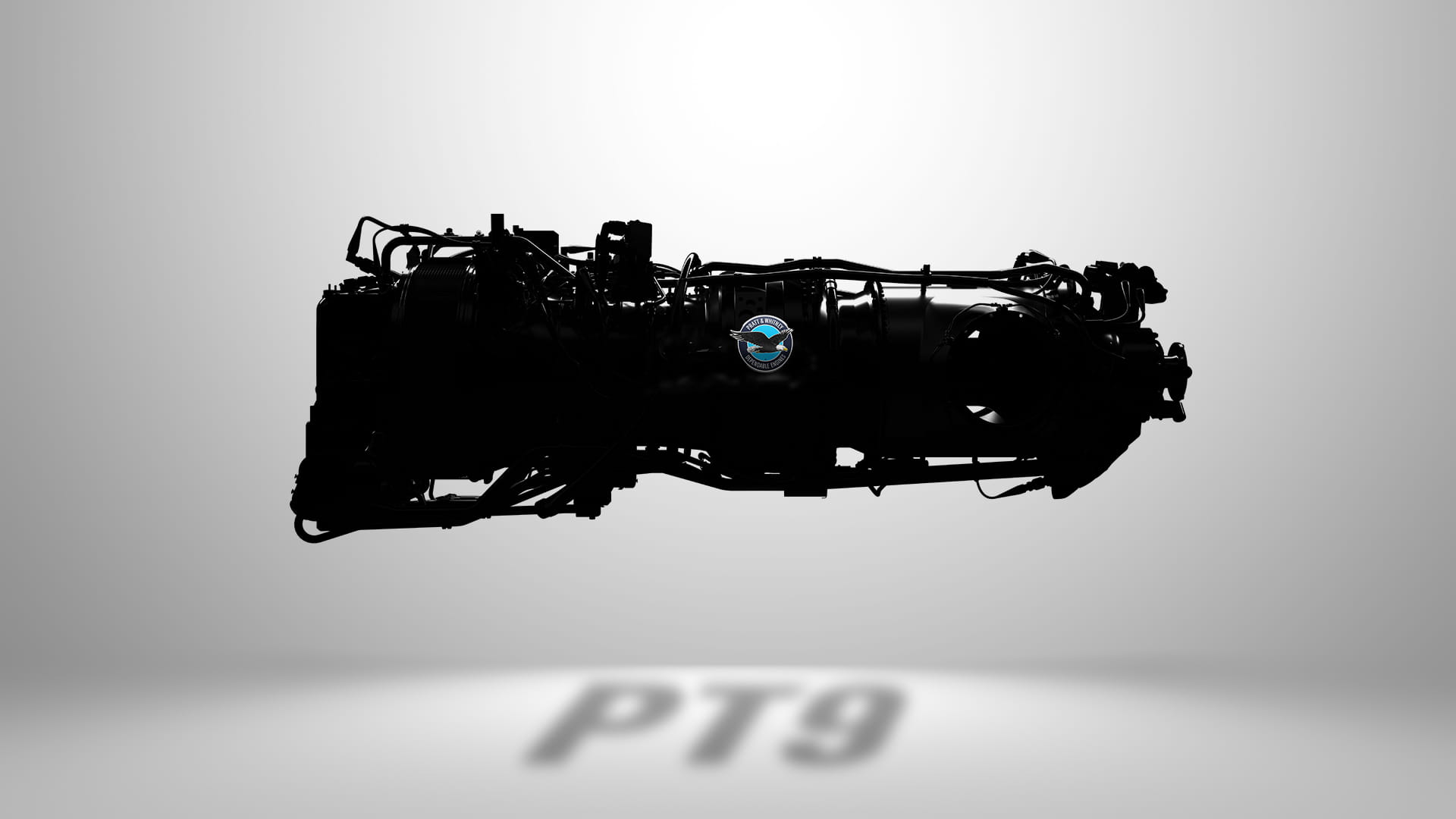
Picture: Pratt & Whitney Canada's image of the PT9, taken from RTX's news release of Oct. 21, 2026, where it heads the page. The same image heads the item in Pratt & Whitney's newsroom. It is the company's picture, shown here to report its announcement.