
Five items in 14 CFR part 91 come due by the calendar whether or not the aircraft has flown. Each has its own interval, its own section, and its own rule about who may do it. The intervals below are from the regulations as they stood on October 8, 2026.
Annual inspection: 12 calendar months (91.409)
Section 91.409(a) says no person may operate an aircraft unless, within the preceding 12 calendar months, it has had an annual inspection in accordance with part 43 and been approved for return to service by a person authorized by section 43.7.
Paragraph (c) takes several aircraft out of that rule. Among them is an aircraft that carries "a current experimental airworthiness certificate" or "a special airworthiness certificate in the light-sport category." For an experimental amateur-built aircraft the inspection is the condition inspection, and it is required by the aircraft's operating limitations, not by this section. The operating limitations are the document to read for its interval and for who may do it.
The 100-hour inspection of paragraph (b) applies only to an aircraft carrying a person for hire, or used for flight instruction for hire by the person who provides the aircraft. Paragraph (c) excludes the same aircraft from it.
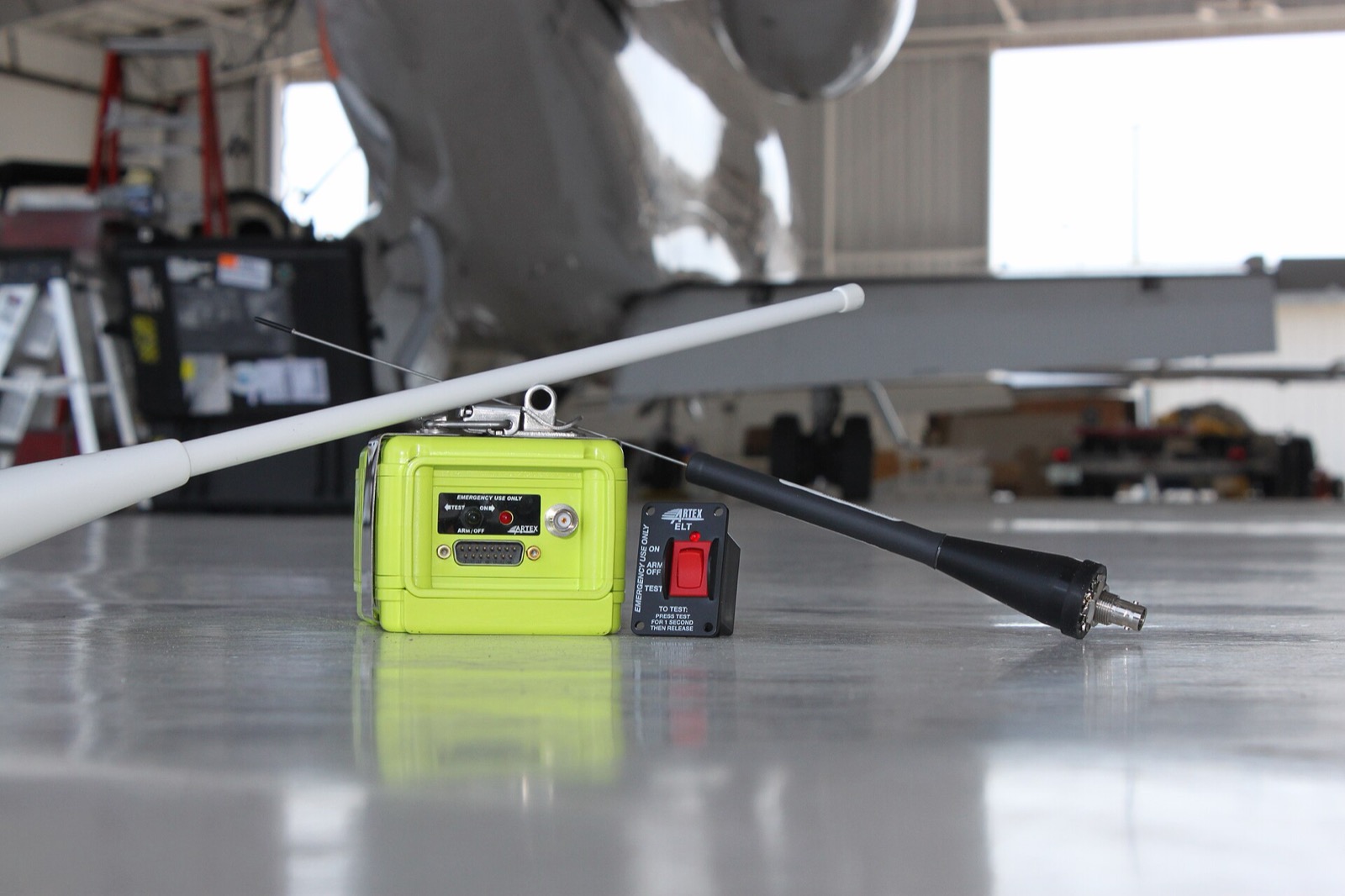
Emergency locator transmitter: 12 calendar months (91.207)
Section 91.207(d) requires each required ELT to be inspected within 12 calendar months after the last inspection for four things: proper installation, battery corrosion, operation of the controls and crash sensor, and the presence of a sufficient signal radiated from its antenna.
The battery has its own rule in paragraph (c). It must be replaced, or recharged if rechargeable, when the transmitter has been in use for more than 1 cumulative hour, or when 50 percent of its useful life has expired, as established by the transmitter's manufacturer. The new expiration date must be legibly marked on the outside of the transmitter and entered in the aircraft maintenance record.
Paragraph (f) lists the aircraft the ELT rule does not apply to. One of them is an aircraft equipped to carry not more than one person.
Transponder: 24 calendar months (91.413)
Section 91.413(a) says no person may use an ATC transponder unless, within the preceding 24 calendar months, it has been tested and inspected and found to comply with appendix F of part 43. The test must be done by a certificated repair station holding the ratings the section lists, by the holder of a continuous airworthiness maintenance program, or by the manufacturer of the aircraft if that manufacturer installed the transponder.
Altimeter and static system, for IFR: 24 calendar months (91.411)
Section 91.411(a) applies to operating an airplane or helicopter in controlled airspace under IFR. Within the preceding 24 calendar months, each static pressure system, each altimeter instrument and each automatic pressure altitude reporting system must have been tested and inspected and found to comply with appendices E and F of part 43.
The same section requires a test after the static system has been opened and closed, other than by its drain and alternate static valves.
VOR check, for IFR: 30 days (91.171)
Section 91.171(a) applies to operating under IFR using the VOR system. Unless the equipment is maintained under an approved procedure, it must have been operationally checked within the preceding 30 days and found within the permitted bearing error. Against an FAA-operated or approved test signal, or at a designated VOR checkpoint on the airport surface, the maximum permitted error is plus or minus 4 degrees.
Keeping track
Each of these is a date that an owner has to carry forward from the last entry in the maintenance records. Hangar Flying's MRO, which is in testing, keeps an aircraft's annual or condition inspection, its airworthiness directives and its recurring items, among them the ELT, the pitot-static and transponder tests and the VOR check, and lists what is coming due.
Sources
- 14 CFR 91.409, 91.207, 91.413, 91.411 and 91.171, from the Electronic Code of Federal Regulations, current as of October 8, 2026. Read October 11, 2026.
- Photo: Emergency Locator Transmitter by Mdarcangelo, Wikimedia Commons, CC BY-SA 4.0.