
Pilots who buy a flying homebuilt are not usually beginners: in the survey behind the NTSB's study of these airplanes, owners who had bought used reported a median of 1,350 total flight hours and a median of 200 in amateur-built airplanes. Much of that experience comes from other airplanes, though. An experimental airplane's stall, its control forces and even the layout of its fuel system may be unlike anything the pilot has flown, and two airplanes of the same model may differ from each other.
What the NTSB found
The NTSB's safety study of experimental amateur-built aircraft, adopted May 22, 2012, compared two groups. In the EAA survey of amateur-built owners and builders, 1,499 of the 2,583 respondents who had built their airplanes and answered the question, or 58 percent, reported some kind of transition training before their first flight. Among the 227 pilots of the amateur-built airplanes in accidents the NTSB investigated in 2011, investigators found evidence of a transition training requirement, typically from an insurance company, for 19, or 8 percent.
The NTSB cautioned that accident records may understate the training, especially in fatal accidents where the pilot could not be interviewed. It still called the proportion strikingly low, and concluded that pilots who did not seek training were overrepresented in the accidents and that loss-of-control accidents could be reduced if more pilots received it. The study also reported that amateur-built airplanes were nearly 10 percent of the U.S. general aviation fleet in 2011, about 15 percent of its accidents and 21 percent of its fatal accidents.
The second owner has the harder case. FAA Advisory Circular 90-109A says accident analysis shows subsequent owners and pilots of experimental and unfamiliar airplanes have a higher accident rate during initial flight time than the original owner or pilot did, and recommends airplane-specific training before they operate the airplane. It tells a buyer to learn all that is possible from the previous owner.
What is different about these airplanes
Type-certificated small airplanes have to give adequate stall warning and have fairly benign stall and recovery characteristics. As AC 90-109A points out, no such rule exists for an experimental airplane. Some can be flown with the stick all the way back; others can depart controlled flight with no warning to speak of. Because each is built by an individual, stall behavior can vary widely between airplanes of the same model, and the circular lists small errors in wing or tail incidence, an incorrect center of gravity and added antennas or scoops among the things that can change stability and control.
Experience in faster airplanes is no protection either. The circular says accident data show as much risk in moving down in performance as in moving up, and that a pilot from high-performance corporate, airline or military flying is not prepared by that alone for a low-inertia, high-drag airplane.
What the training covers on an RV
Van's Aircraft says it highly recommends RV-specific transition training even for experienced pilots, and that insurance companies may insist on it. Its syllabus, a two-page outline that instructors tailor, sets the goal at flying the basic maneuvers to the minimum standard of a private pilot checkride, and it shows what is unusual about the type:
- Light stick forces and quick control response, which invite over-controlling on a crosswind takeoff and make altitude hard to hold in a constant-altitude turn.
- High P-factor, calling for more right rudder in the climb and on a go-around than a low-powered trainer does.
- A light, subtle aerodynamic stall warning, so the slow-flight work asks for airspeed held within 5 mph of the stall buffet.
- High descent rates at low speed and limited ground effect, both from the short wing, with an approach speed of 1.35 or 1.4 times Vso rather than the traditional 1.3.
- Spring steel landing gear that is less tolerant of bounces than a light trainer's, and that demands precise touchdown control on a wheel landing.
The ground portion stresses the differences between the RV used for training and the one the pilot will fly: engine horsepower, propeller, empty weight and center of gravity.
Van's training page says the program is for pilots building or owning an RV who are current in other general aviation airplanes when they start, and that it is not a tailwheel endorsement, a flight review or aerobatic instruction. The page listed seven instructors on October 30, 2026, in Oregon, Texas, Illinois, Kansas, Idaho and Minnesota. RV-12 training goes through separate flight schools.
Which airplane to train in
AC 90-109A ranks the choices. Best is the airplane the pilot will actually fly, with a well-qualified instructor who preferably has recent experience in the make and model. Next is another airplane of the same make and model. Third is an airplane with similar characteristics, which may be a type-certificated one; the circular sorts designs into families by handling and performance, with a lookup table of common amateur-built models, for that purpose. It warns that airplanes of the same non-certificated model may still handle differently.
A builder's position differs from a buyer's here. The NTSB agreed with EAA that transition training should not be combined with Phase I flight testing, so a builder's training comes first, in another airplane. A buyer of a flying two-seat airplane may be able to do it in the airplane itself, the circular's first choice.
Who may give it
Training in an experimental airplane used to raise a question about 14 CFR 91.319, which bars carrying persons for compensation or hire in one. Under section 5604 of the National Defense Authorization Act for Fiscal Year 2023, and the FAA's notice of February 8, 2023, an instructor or owner needs no letter of deviation authority (LODA) so long as the instructor is not providing both the training and the airplane, nobody advertises or broadly offers the airplane for training, and nobody is paid for the airplane's use on a specific flight beyond the expenses of owning, operating and maintaining it.
So an owner may hire an instructor to train in the owner's own airplane without a LODA. An instructor who supplies both the airplane and the instruction needs one, as does an owner who advertises the airplane for training. EAA keeps a list of LODA holders by state, showing the types each teaches; the list carries no date, so an owner should confirm an instructor's status directly.
Finding help
Van's letter to prospective buyers lists what to do after buying: send the company the bill of sale, redo the weight and balance following the builder's manual, take off the cowl and seat pans to learn the systems, get transition training and practice. The FAA also recommends that a seller give a buyer a copy of AC 90-109A, and that an owner lending an experimental airplane go through it with the pilot. EAA reprints the circular as its Transition Training Guide and runs the Flight Advisor program, which helps a pilot prepare to transition to an unfamiliar airplane. For a type other than an RV, the kit maker and the type club are the places to ask, though the circular notes that forum advice comes from people whose airplanes may not behave like the one in question.
Insurance may require it. In the NTSB's survey, policies required transition training for 37 percent of kit builders. An owner should ask the insurer what it requires before the first flight, not after.
Sources
- National Transportation Safety Board, The Safety of Experimental Amateur-Built Aircraft, Safety Study NTSB/SS-12/01, adopted May 22, 2012, sections 4.1, 4.5, 5.3 and 5.4.1 (full report). Read October 30, 2026.
- FAA, Advisory Circular 90-109A, Transition to Unfamiliar Aircraft, June 29, 2015, read in EAA's Transition Training Guide reprint, paragraphs 5 to 8. Read October 30, 2026.
- Van's Aircraft, RV flight training, RV Transition Training Syllabus and So You're Considering Buying a Flying RV. Read October 30, 2026. Van's documents, summarized here in new words.
- FAA, Notification of Policy for Implementation of the James M. Inhofe National Defense Authorization Act for Fiscal Year 2023 for Flight Training, Checking, and Testing in Experimental Aircraft, Federal Register, February 8, 2023. Read October 30, 2026.
- EAA, Letters of Deviation Authority Holders. Read October 30, 2026.
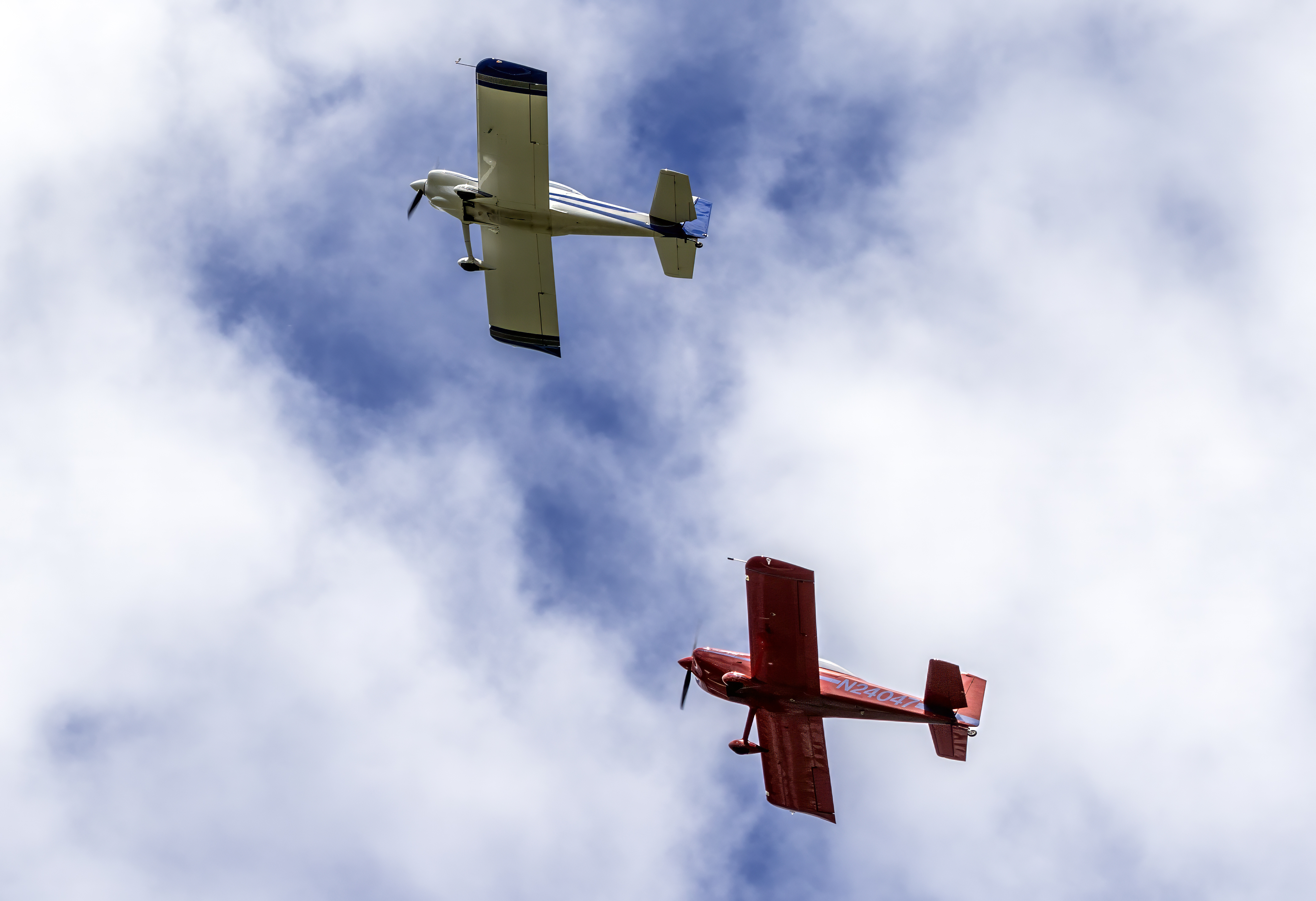
- Photo: Van's RV-8 N24047 and Van's RV-4 N430BZ by Acroterion, Wikimedia Commons, CC BY-SA 4.0.