
Owners of Lycoming O-235, O-540 and IO-540 engines with piston pins made from 2021 to 2025 have a directive to check. AD 2026-17-10 went into effect on September 14, 2026, without the usual comment period first, because the FAA judged the risk too great to wait. Some of its compliance times are short: five hours, 25 hours, or before further flight.
Why the FAA issued it
Lycoming reported metal particles found in engine oil at oil changes, and two engine failures, on O-235, O-540 and IO-540 engines. Its investigation, as the AD describes it, found that some thin-wall piston pins had been made with microcracks and inclusions in the base metal after the pin supplier changed its honing and tooling processes. A pin that fails sends metal through the engine, where it can damage bearings and other cylinders and block oil passages. The FAA says the result could be engine failure, an in-flight shutdown and loss of control of the airplane.
Which engines
The AD applies to listed models of the O-235, O-540 and IO-540 (the full list of dash numbers is in paragraph (c) of the AD) when two things are both true:
- The engine's serial number is in Table 2 or Table 3 of Lycoming Mandatory Service Bulletin 667A, dated March 12, 2026.
- It has piston pins with part number LW-13445 whose FAA Form 8130-3 from the original manufacturer shows a production date from January 7, 2021, to December 15, 2025.
If the production date on the 8130-3 can't be determined, or the form isn't available, the AD treats the pin as affected. The FAA estimates 957 engines on airplanes of U.S. registry.
What it requires
First, an oil change and a look for metal. Every affected engine gets an oil change and a visual inspection of the oil filter, the oil pressure screen and the oil suction screen for metal particles:
- Engines listed in Table 3 of MSB 667A with more than 150 hours time in service since the affected pins were installed: before further flight.
- All other affected engines: within 5 hours time in service after September 14, 2026, unless an oil change was done within the last 10 hours.
The AD points to Lycoming MSB 480F, dated May 25, 2017, for guidance on inspecting the filter and screens and identifying metal. This first step is the FAA's own addition; MSB 667A does not require it.
Then, new pins. The affected pins come out and are replaced with a part eligible for installation, following MSB 667A for the engine model. When that happens depends on what the oil inspection found:
- Metal found: before further flight.
- No metal, serial number in Table 2: at the next maintenance that removes a cylinder with an affected pin, or at the next overhaul within the time between overhauls in Lycoming Service Instruction 1009BE, whichever comes first.
- No metal, serial number in Table 3, 150 hours or less since the pins were installed: within 25 hours time in service after September 14, 2026, and before the pins reach 150 hours.
A pin is eligible if it isn't P/N LW-13445, or if it is LW-13445 with an original-manufacturer 8130-3 dated outside January 7, 2021, to December 15, 2025. After September 14, no affected pin may be installed in any engine, which matters to anyone holding spare pins or cylinder kits.
A special flight permit may be issued to fly the airplane somewhere for the pin replacement, but only if no metal was found. None is allowed for the oil and screen inspection itself.
Cost
The FAA estimates 2 work-hours at $85 an hour and $2,200 in parts, $2,370 an engine, and notes that Lycoming says some costs may be covered under warranty.
Amateur-built aircraft
Many amateur-built airplanes fly with O-235, O-540 and IO-540 engines. As with AD 2026-04-11 on Lycoming connecting-rod bushings, the applicability paragraph of AD 2026-17-10 names engines, serial numbers and parts, and does not say it reaches aircraft that aren't type-certificated. FAA Advisory Circular 39-7D says that unless an AD states otherwise, it applies only to type-certificated aircraft, including ADs issued for an engine. So the AD, as written, does not legally bind an engine on an amateur-built aircraft. The pins are the same parts either way. A builder with one of these engines can check its serial number against MSB 667A and the 8130-3s for its pins, and an inspector doing a condition inspection can ask the same question.
Comments
The FAA took comments on the AD until October 13, 2026, and may amend it in response. The docket is FAA-2026-8789 at regulations.gov.
Sources
- FAA, AD 2026-17-10, Airworthiness Directives; Lycoming Engines, Amendment 39-23454, Docket FAA-2026-8789, Federal Register, 91 FR 55451, August 28, 2026; effective September 14, 2026. Read in full October 19, 2026.
- Lycoming, Mandatory Service Bulletin 667A, March 12, 2026 (incorporated by reference in the AD; Lycoming's publication, not reproduced here). Lycoming MSB 480F, May 25, 2017, and Service Instruction 1009BE, April 24, 2020, are named in the AD and available from Lycoming's publications.
- FAA, Advisory Circular 39-7D, Airworthiness Directives, March 2, 2012, paragraph 9.
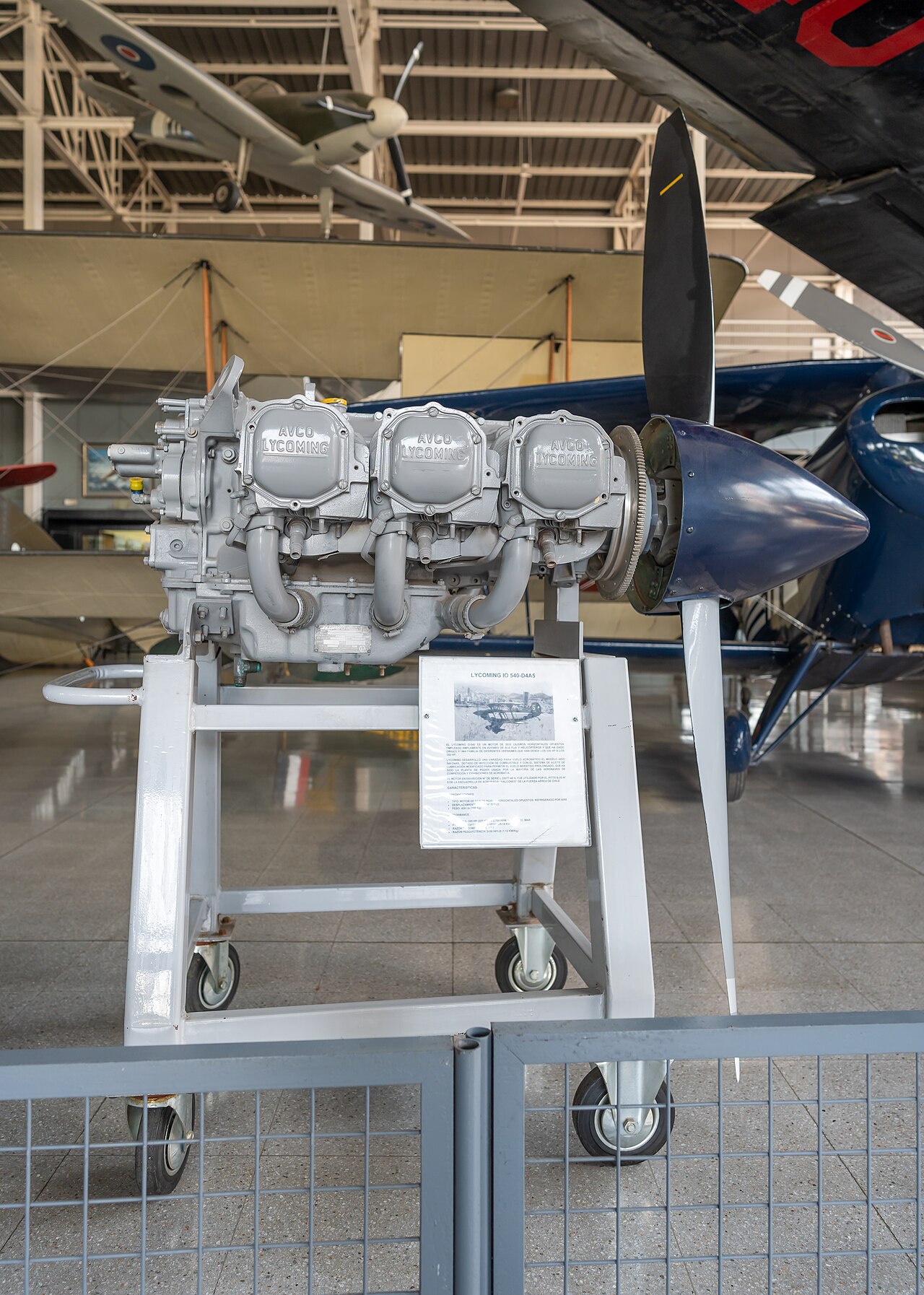
- Photo: Lycoming O-540 - A742693 by Rjcastillo, Wikimedia Commons, CC BY-SA 4.0.