
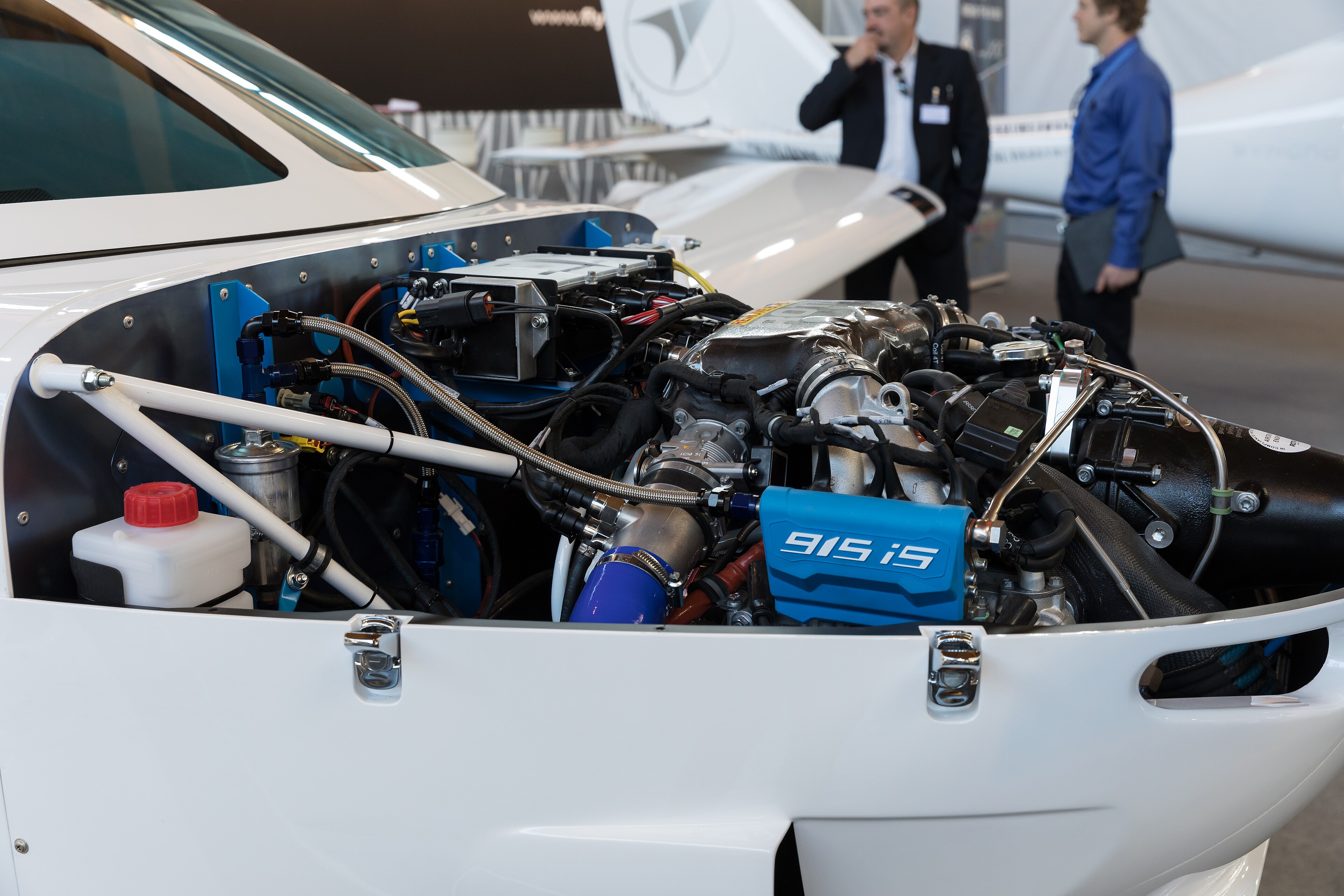
Rotax told owners in September that some turbocharged 915 and 916 engines may have left the factory with a defective oil valve housing. On November 2, 2026, the FAA turned that into a directive for the certified engines. The FAA estimates that Airworthiness Directive 2026-22-03 affects 51 engines on U.S.-registered airplanes, but owners and builders with the non-certified versions have the same part to check.
What went wrong
During final testing of a 916 on the production line, Rotax found oil leaking near the turbocharger valve housing, part number 956492. The housing's wall had cracked because it was too thin. Rotax's bulletin traces that to a manufacturing issue introduced by the supplier.
The FAA says the oil leak could lead to smoke, an engine compartment fire, an in-flight shutdown and loss of control. It also says the growth rate of the cracking hasn't been determined, which is why it adopted the directive without first taking comments.
What the AD covers
The AD applies to six models: the 915 iSc2 C24, 915 iSc3 C24, 916 iSc2 A, 916 iSc2 C24, 916 iSc3 A and 916 iSc3 C24. The 915 iSc2 A, 915 iSc3 A and 916 iSc3 B are in the European directive but not this one, because they have no FAA type certificate.
The FAA's own text is short. It requires an owner to do what European Union Aviation Safety Agency (EASA) Emergency AD 2026-0178-E, dated September 14, 2026, requires, using the U.S. effective date wherever the EASA document refers to its own. The FAA describes that work as replacing the valve housing and reidentifying the turbocharger, and it says the AD must be accomplished before further flight after the effective date.
EASA's document holds the details an owner will have to follow. Hangar Debrief could not open it on November 2, because EASA's airworthiness directive site was unavailable, so this article does not describe its terms. The FAA says the document will be in the docket, FAA-2026-11820, at regulations.gov.
The AD gives two effective dates
The header of the AD says it is effective November 23, 2026. Paragraph (a) of the rule itself says November 4, 2026, which is also the date the header gives for the incorporation by reference. Both dates appear in the official printed version in the Federal Register, at pages 68882 and 68884. Hangar Debrief saw no correction on the day of publication.
FAA Advisory Circular 39-7D says the date is found in paragraph (a) of each AD, and with an unsafe condition and a before-further-flight compliance time, an owner who works to November 4 is covered under either date. The AD names Joseph Catanzaro of the FAA as its contact. Comments are due December 17, 2026.
An amateur-built or light-sport airplane
AC 39-7D says that unless an AD states otherwise, it applies only to type-certificated aircraft, including an AD issued for an engine. To reach an engine in an amateur-built airplane, the FAA adds a sentence saying the AD applies to any aircraft with the listed engines installed. AD 2026-22-03 has no such sentence, so its wording does not reach an iSc engine in an airplane without a type certificate. Hangar Debrief covered the same question for a Lycoming directive. An owner who wants a ruling on a particular airplane should ask the local Flight Standards District Office.
The non-certified 915 iS and 916 iS aren't in the AD either, but the defect doesn't depend on the paperwork. Rotax's version of the bulletin for those engines, ASB_A-2026-002, classes the work as mandatory, covers the 915 iS A, 916 iS A and 916 iS B series that Rotax calls ASTM compliant, and sets these times:
- Installed engines: before next flight, and at the latest one year from the bulletin's initial issue of September 3, 2026.
- Uninstalled engines and spare turbochargers: before initial installation.
- Stored engines and spare parts: before delivery.
That middle line is the one for a builder with an engine still in its crate or on a stand. In the United Kingdom, where the Civil Aviation Authority made the replacement mandatory on permit aircraft from September 18, the directive points out that these engines are installed by amateur constructors as well as manufacturers.
How an owner tells whether an engine is affected
Rotax lists affected engines by serial number in the bulletin's appendix, and affected spare turbochargers, assembly part number 893102, by theirs. Engines above the listed serial numbers had the housing replaced before leaving the factory, according to Rotax. The list covers both certified and ASTM-compliant engine types, and the person doing the work has to confirm that it applies to the engine in question. Rotax's first page of the certified bulletin names only the 916 iSc A and B, so an owner should go by the AD's models and the serial list rather than that page.
An engine's logbook comes next, since the housing may have been changed in maintenance. The new housing carries the same part number as the old one, 956492, so the number doesn't settle it. Rotax's Revision 1 of September 11 added a mark: a letter C engraved on the compressor housing above the turbocharger's serial number shows that the turbocharger has a valve housing the bulletin doesn't affect, so its status can be read without the serial list. Under the certified bulletin, anyone who did the work to the initial issue doesn't repeat it, but does have to add the mark. The bulletin says the work and the marking must be confirmed in the logbook.
The work
The bulletin's job is to take off the turbo pressure oil line and the old housing, install a new housing with new seals, then purge the oil system, run the engine and check for leaks. Rotax limits it to its distributors and service centers, people approved by the aviation authority, and people with type-specific training or its iRMT heavy maintenance rating.
The FAA estimates two work-hours and $150 in parts, or $320 an engine at its $85 labor rate, and says some of that may be covered under warranty. Rotax offers a labor credit through its distributors for work by a technician with a current iRMT rating, and it doesn't cover shipping, downtime or other costs.
For a certified engine, the owner also records the AD's status, with the method of compliance, the AD number and the revision date, as 14 CFR 91.417 requires.
Sources
All read November 2, 2026, except as noted.
- FAA, Airworthiness Directive 2026-22-03, BRP-Rotax GmbH & Co KG Engines, Federal Register, November 2, 2026, pages 68882 to 68885, Docket No. FAA-2026-11820, Amendment 39-23505 (official PDF).
- EASA Emergency AD 2026-0178-E, September 14, 2026. Not read: EASA's site was unavailable. Named from the FAA's AD.
- BRP-Rotax, Alert Service Bulletin ASB-2026-002R01, Revision 1, September 11, 2026, certified engines, read October 30 and November 2, 2026, serial lists not reproduced. Rotax's document, referenced here in new words.
- BRP-Rotax, Alert Service Bulletin ASB_A-2026-002, initial issue, September 3, 2026, ASTM-compliant engines, read in a copy hosted by aerovfr.com. The UK directive names a Revision 1 of this version, dated September 11, 2026, which Hangar Debrief did not read. The current revision is at flyrotax.com.
- UK Civil Aviation Authority, Emergency Mandatory Permit Directive 2026-005-E, September 16, 2026, effective September 18, 2026.
- FAA, Advisory Circular 39-7D, Airworthiness Directives, March 2, 2012, paragraphs 9, 10 and 15.
- 14 CFR 91.417, Maintenance records.
- Photo: Rotax 915 iS, AERO 2018, Friedrichshafen.jpg) by Matti Blume, Wikimedia Commons, CC BY-SA 4.0, resized. The engine pictured is an illustration of the type and is not known to be affected.