
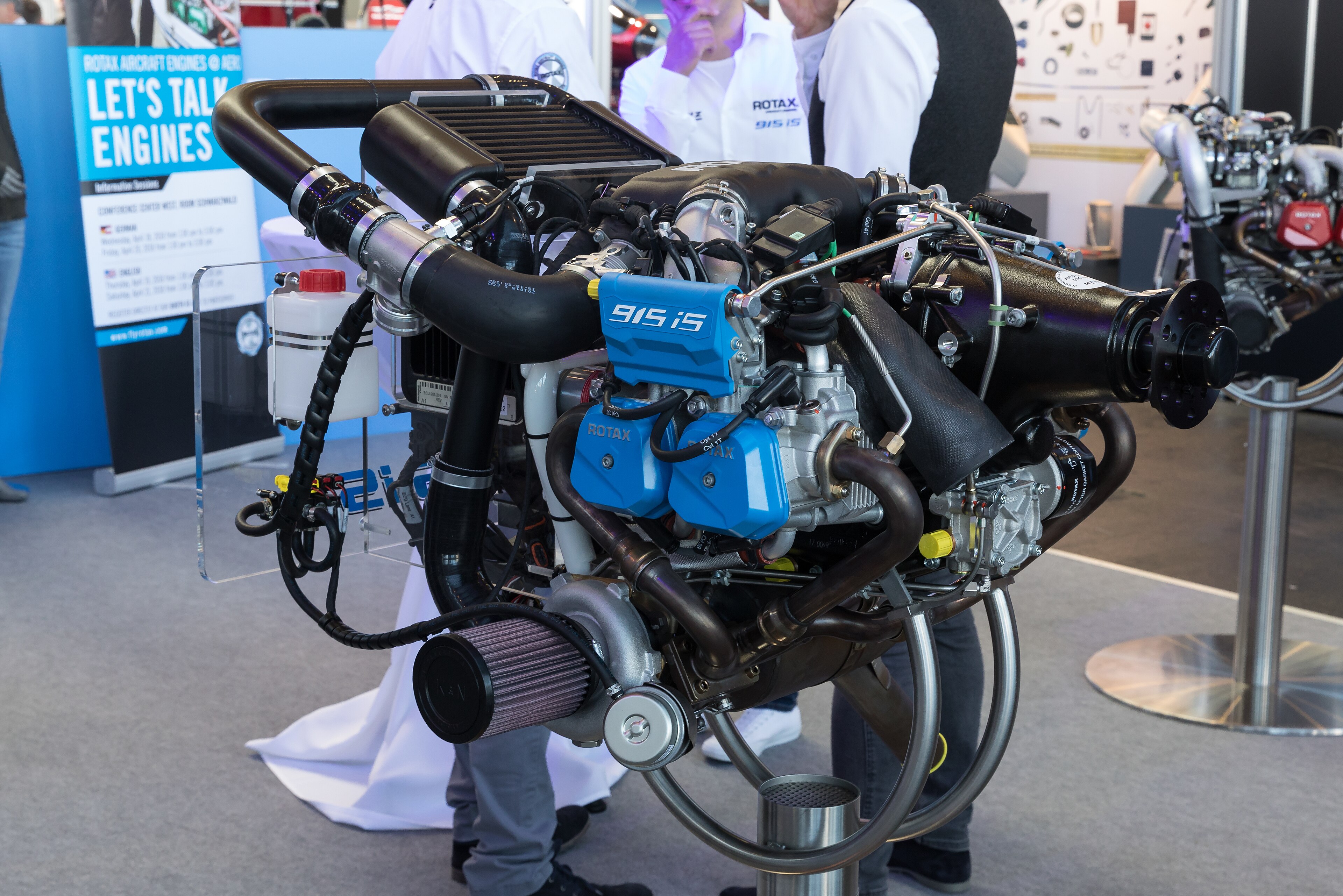
An owner who chose the turbocharged Rotax 915 has lived with a shorter overhaul time than the engine's newer sibling. Rotax's product page lists the 915 at 1,200 hours between overhauls and the 916 at 2,000. On November 10, 2026, Rotax published two service bulletins that let some 915s reach 2,000 hours as well. The offer is optional, it covers only engines from certain serial numbers on, and its conditions have to have been met since the engine first ran. An engine can't be brought into it later.
Which engines
There is one bulletin for each family. SB_A-2026-003 covers the engines Rotax calls ASTM compliant, the non-certified versions sold for light-sport and amateur-built airplanes: the 915 iS A from serial number 10006742 and the 915 iS C24 from 10010510. SB-2026-003 covers the certified engines: the 915 iSc A from serial number 10006805 and the 915 iSc C24 from 10012483. An engine with a lower serial number stays at 1,200 hours.
Both bulletins are initial issues, and Rotax classes both as optional, its lowest of four levels, meaning no unsafe condition and no need to act.
The conditions
Besides the serial number, Rotax sets three conditions:
- XPS Aircraft 5W50 oil, a full synthetic made to Rotax's own specification, is used for the engine's whole life.
- The maximum oil temperature is 120 °C (248 °F) from the engine's first entry into service.
- The engine is maintained to Rotax's approved maintenance instructions.
The bulletins say the 2,000-hour time applies only to engines that have met these conditions "since hour 0." Otherwise the 1,200-hour time applies. So an engine that has run a different oil at any point doesn't qualify, and neither does one operated to a higher oil temperature limit.
The aircraft's maker goes first
The bulletins give the first job to the aircraft's manufacturer. It has to make sure the aircraft type can keep its oil temperature at or below 120 °C, establish that figure as the type's approved oil temperature limit, and make sure only the XPS oil is used through the engine's life. Owners, pilots and maintainers are then told to follow the new requirements "according to the implementation of the OEM."
Rotax adds that changing a temperature limit may affect the aircraft's certification, and that this may need to be settled with the aviation authority or certification body. For an owner of a factory-built airplane, that makes the airframe maker the first call: whether it has adopted the 120 °C limit for the type, and from which airplanes on. Kit makers offer the engine too. RANS, for one, publishes specifications for its S-21 Outbound with the 915 iS.
What changes in maintenance
A 2,000-hour engine gets a different schedule, and the bulletins name the main changes. Five propeller gearbox tasks that fall at 600 hours on a 1,200-hour engine move to 1,000 hours: checking the gear set for pitting, checking the overload clutches and the wear on their teeth, checking wear on the intermediate shaft, and changing the torsion shaft. One task is new. On a 2,000-hour engine the rocker arm bushings are replaced at 1,000 hours.
The steps are in Rotax's heavy maintenance manual, and Rotax limits the work to people with its iRMT line or heavy maintenance rating, its distributors and service centers, and people approved by the aviation authority. No parts are needed to adopt the bulletin and nothing changes in weight or software. Rotax says carrying out the bulletin must be confirmed in the logbook.
What the bulletins don't say
They don't say how an amateur builder, who is the manufacturer of the airplane, takes the steps given to the aircraft's maker. They don't say what record shows that an engine has never exceeded 120 °C or never run another oil, beyond checking the logbook and maintenance documents. And they don't mention a calendar limit.
Neither bulletin is a rule. Whether a maker's overhaul time binds a particular airplane depends on its certificate and operating limitations, and the bulletins leave that to the owner and the authority. Questions go to a Rotax distributor or service center, which Rotax lists at dealerlocator.flyrotax.com.
For a builder with a new 915 on order or in the crate, the practical point is the first oil fill. The oil and the temperature limit have to be right from the first hour, and an entry in the engine logbook from that day is the record a later buyer will want to see.
On Hangar Flying: The engine lookup shows the documents that govern an engine model.
Sources
All read November 14, 2026.
- BRP-Rotax, Service Bulletin SB_A-2026-003, "Optional extension of Time Between Overhaul (TBO) from 1200 h to 2000 h on ROTAX 915 iS (Series) Aircraft Engines," initial issue, November 10, 2026, ASTM-compliant engines. Rotax's document, referenced here in new words.
- BRP-Rotax, Service Bulletin SB-2026-003, the same subject for 915 iSc (Series) engines, initial issue, November 10, 2026, certified engines. Rotax's document, referenced here in new words.
- Both bulletins name Service Instruction SI-915 i-001, on suitable operating fluids, which Hangar Debrief did not read. Current revisions of Rotax's documents are at flyrotax.com.
- BRP-Rotax, 915 iS A and iSc A product page ("TBO 1,200 hrs") and 916 iS product page ("TBO 2,000 hrs").
- RANS Aircraft, S-21 Outbound, which links specifications with the Rotax 915 iS.
- Photo: Rotax 915 iS, AERO 2018, Friedrichshafen.jpg) by Matti Blume, Wikimedia Commons, CC BY-SA 4.0, resized.