Seat belts and shoulder harnesses get looked at at every annual, and in an older airplane they are often the original ones. In April 2026 the FAA issued Special Airworthiness Information Bulletin 2026-10, revised on April 15 as SAIB 2026-10R1, on torso restraint systems and safety belts in general aviation aircraft. It is information only: the FAA says the concern is not an unsafe condition that would call for an airworthiness directive under 14 CFR part 39, and its recommendations are not mandatory. The bulletin is addressed to general aviation aircraft as a whole and makes no exception for amateur-built or light-sport airplanes.
What the NTSB found
The National Transportation Safety Board told the FAA about several general aviation accidents in which restraint assemblies failed under impact loads. The bulletin says it is not known whether those loads went beyond what the restraints were designed for, but that a failed restraint may contribute to serious injury or death.
One case it describes is NTSB accident CEN12FA601, an Aeronca 7AC that struck terrain after a loss of control on takeoff. The pilot was seriously injured and the passenger was killed. The pilot's four-point restraint, an Aero Fabricators model H-702-300, separated at the stitching of the shoulder harness Y-junction, the place behind the occupant's head where the two shoulder straps join the strap that attaches to the fuselage. The NTSB tested the restraints and concluded that the shoulder harness failed at loads below those in current Technical Standard Orders.
A search of NTSB dockets found at least fifteen more general aviation accidents with full or partial failure of a restraint, many of them at the same Y-junction stitching. According to the bulletin, the restraints in those accidents were often designed to TSO requirements that are now obsolete.
The standards and the label
The current minimum standards are TSO-C114, dated March 27, 1987, for torso restraints, and TSO-C22g, dated March 5, 1993, for pelvic safety belts. Both are equivalent to SAE AS8043, "Torso Restraint Systems," of March 1986.
The FAA recommends that owners and operators:
- make sure their restraints meet TSO-C114 (torso) and TSO-C22g (pelvic), or later revisions;
- confirm it by reading the manufacturer's label on each assembly, which may give the TSO number, the rated strength, or both. A rated strength of 3,000 pounds or more meets the current requirements;
- replace any restraint that is not labeled as meeting TSO-C114 or TSO-C22g or later, that is rated below 3,000 pounds, or whose label is missing, illegible or unreadable.
The bulletin's own example of a label that does not meet the standards reads "FAA TSO-C22f" and "RATED 1500 LBS." So a belt can carry a TSO number and still be one revision behind.
The inspection
For owners, operators and maintenance technicians, the FAA recommends a visual check of both the shoulder and the pelvic restraints at every preflight and at the annual inspection, looking for wear, deformation, discoloration, defects and fraying. It asks for particular attention to the stitching at the Y-junction behind the occupant's head and to the fastener hardware. Findings of damage go to the FAA contact named in the bulletin, with the make, model and serial number of the restraint and the aircraft, a description, photographs and the damaged parts' time in service.
Where the rules come in
On an airplane with a standard airworthiness certificate, 14 CFR 91.205(b)(13) and (14) require an approved safety belt with an approved metal-to-metal latching device, or other approved restraint system, for each occupant 2 years of age or older, and an approved shoulder harness or restraint system for each front seat of a small civil airplane manufactured after July 18, 1978, and for every seat of one manufactured after December 12, 1986.
Replacing safety belts is item (14) of the preventive maintenance list in 14 CFR part 43, appendix A, paragraph (c). Under 14 CFR 43.3(g), a pilot certificated under part 61, other than a sport pilot, may do preventive maintenance on an aircraft he or she owns or operates that is not used under part 121, 129 or 135; a sport pilot may do it on an aircraft he or she owns or operates that has a special airworthiness certificate in the light-sport category. ## Sources
- FAA, Special Airworthiness Information Bulletin 2026-10R1, Equipment / Furnishings - Restraint Systems, April 15, 2026, in the FAA Dynamic Regulatory System, SAIBs; the original SAIB 2026-10, April 8, 2026. The FAA's text was read October 22, 2026, from the copy of SAIB 2026-10 posted by the Norwegian Civil Aviation Authority, because the DRS pages need a browser and EASA's copy of the revision was down for maintenance. The revision changed a date in the background section, so this article gives no date for the accident.
- 14 CFR 91.205, 14 CFR 43.3 and 14 CFR part 43, appendix A, eCFR, read October 22, 2026.
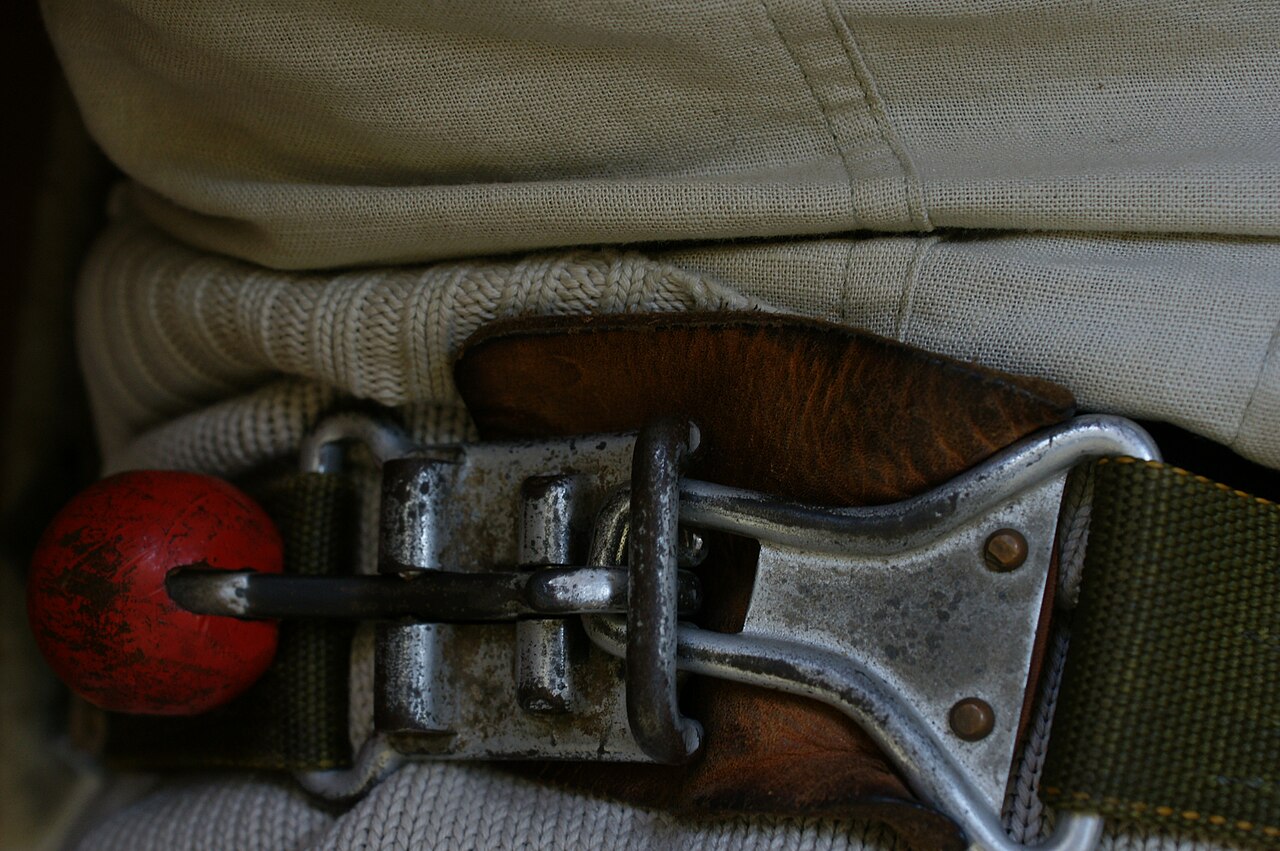
- Picture: Seatbelt cessna C206 1982 2.jpg, Valugi, CC BY-SA 3.0, via Wikimedia Commons.