
For an owner whose airplane sits outside or in an unheated hangar, the first cold mornings of the season bring the same question: preheat or not. Lycoming's answer is written down. Its Service Instruction 1505, Cold Weather Starting, applies to all Lycoming aircraft engines and says preheat makes cold-weather starting easier and is required when the engine has been allowed to drop below +10°F (-12°C). For the -76 series the line is +20°F (-6°C); Lycoming's cold-weather page names the O-320-H and the O/LO-360-E as the engines in that series. The page adds that the limits hold with multi-viscosity oil too.
The reason is the oil. In the cold it congeals, the battery has less to give and the starter works harder. The service instruction says a poor cold start can mean abnormal engine wear, lower performance, a shorter time between overhauls or an engine that does not run properly. Lycoming's page puts the cost of a partial preheat, one that leaves part of the engine or the oil system cold, as minor abnormal internal wear that over time lowers performance and shortens TBO.
Hot air, done Lycoming's way
The instruction describes preheat with a high-volume hot-air heater. The air goes onto the oil sump, the external oil lines, the cylinders, the air intake, the oil cooler and the oil filter, in 5- to 10-minute intervals. Between intervals the engine is felt by hand to see that it is holding the warmth and that nothing is getting too hot. In the last five minutes the heat goes to the top of the engine. The air is aimed with care so it does not damage rubber, plastic and other non-metal parts, and cowl flaps, where fitted, are opened so heat does not build up around wiring and hoses.
One method is ruled out by name: a heated dipstick is not approved, because it puts concentrated heat in one place, which can damage non-metal parts, and does not warm the oil through the engine.
The start comes right after the preheat, with no more than 5 seconds of cranking per attempt; the instruction recommends an auxiliary power source because a cold battery runs down quickly. After the start the engine stays at the idle speed in the engine operator's manual until oil pressure is steady above the minimum idling range. Lycoming allows up to a minute for that, since a cold line to the gauge can be slow, but if there is no oil pressure within 30 seconds the engine is shut down and the cause found. If no leak or damage turns up, the engine is preheated again before the next start. The rest follows the POH: warm-up at idle until oil pressure and temperature are in the normal range, the propeller control cycled so warm oil reaches the dome, and oil pressure, oil temperature and CHT checked well inside their normal ranges before takeoff.
The instruction lists the signs that an engine is not warm enough for takeoff: roughness, RPM that is low, high or surging, oil pressure that is high, low or fluctuating, fuel flow that is high or low, and excessive manifold pressure.
Installed electric heaters
The other way is a heater that stays on the engine and is plugged in before a flight, or left on through a cold spell. Tanis and Reiff systems are both sold under the Hartzell Preheat name now; the old Tanis and Reiff web addresses lead to hartzellpreheat.com. By Hartzell Preheat's pages:
- Tanis piston systems use a threaded heating element in each cylinder head and heating pads on the engine case. Tanis says its systems keep parts above the dew point to prevent condensation, corrosion and rust, and that it was among the first to meet the FAA's supplemental type certificate requirements for preheat.
- Reiff, which has made piston preheat systems since the early 1980s, uses band heaters around the cylinders and a pad on the oil sump, with an oil cooler element as an option. It comes in a Standard line and a higher-wattage XP line, and Hartzell Preheat publishes an application list by engine.
An installed heater warms the cylinders and the case or sump without a heater cart and someone standing by it. The hot-air method in SI 1505 also covers the oil lines, oil cooler, filter and intake, but needs the cart and the time.
On a type-certificated airplane, installing a heater is an alteration, done from the heater's approval data and recorded in the maintenance records under 14 CFR 43.9. On an experimental amateur-built airplane the builder or owner follows the heater maker's installation instructions and records the work in the airplane's records.
Oil and moisture
Lycoming's page asks for oil of a grade suited to the temperature, as listed in Lycoming Service Instruction 1014, and notes that multi-viscosity oil makes cranking easier. It also says that when an engine does not reach its minimum recommended oil temperature in flight, moisture collects in the oil, and the oil should then be changed more often than every 50 hours.
These figures are Lycoming's and apply to Lycoming engines. Continental, Rotax and other engine makers publish their own cold-weather instructions, and the airplane's POH or the kit maker's manual has the starting procedure for that airplane.
Sources
- Lycoming, Service Instruction No. 1505, Cold Weather Starting, July 1, 2002 (engineering aspects FAA approved), read October 27, 2026.
- Lycoming, Operating in Cold Weather, read October 27, 2026.
- Hartzell Preheat, Tanis and Reiff pages, and the Reiff application list, read October 27, 2026.
- 14 CFR 43.9, eCFR.
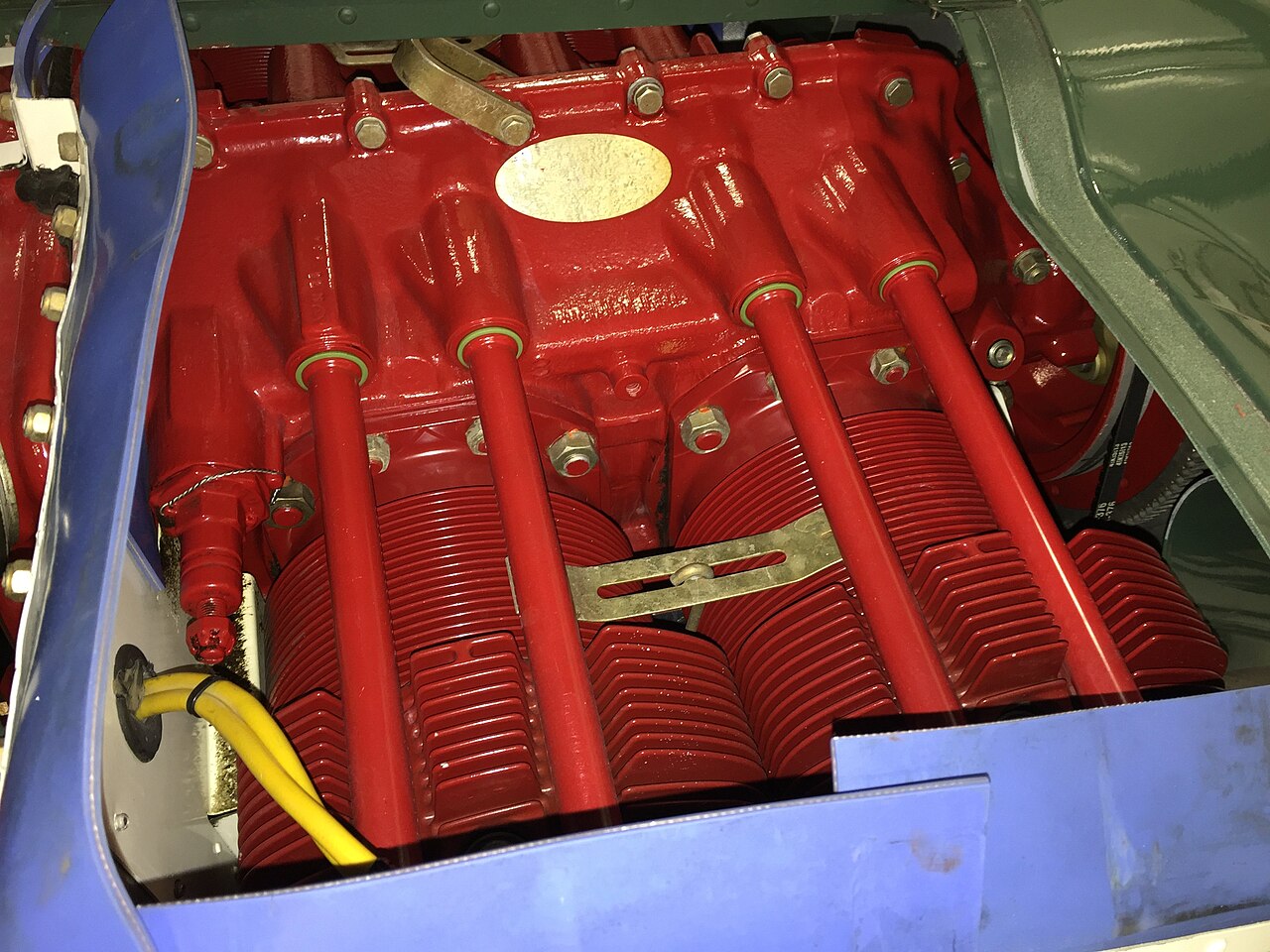
- Picture: EngineO360.jpg, Clangenf, April 10, 2016, CC BY-SA 4.0, via Wikimedia Commons.