
Plenty of mechanics learned safety wire on a military flight line, and plenty of instructors learned to fly in uniform. The light airplanes on any airport's ramp owe even more to military service than that: the biggest year general aviation ever had was flown by pilots the war had trained. Veterans Day is a good day to look at how much of general aviation came out of military service, and how much still does.
The Class of '46
When the Second World War ended, the country had a few million people who knew how to fly or fix airplanes and factories that knew how to build them. Plane & Pilot puts the count of certificated civilian pilots at 33,706 in 1939 and more than half a million by 1949, much of the growth paid for by the GI Bill's flight training benefit.
The airplanes followed. The Vintage Aircraft Association counts more than 30,000 built and sold in 1946 alone: 7,780 Pipers, 7,555 Aeroncas, 3,959 Cessnas, 3,911 Taylorcrafts, 2,503 Ercoupes, 2,483 Luscombes and 1,550 Globe and Temco machines. The Aeronca Champ, the Navion, the Stinson 108, the Cessna 120 and 140 and the Piper Super Cruiser all came to market that year; Hangar Flying's Panel Designer still carries panel templates for the 108 and the 120, for owners redoing the panel of one. The VAA says more than 8,600 of them are still on the FAA registry, and it spent 2026 marking the boom's 80th anniversary as the "Class of '46."
The boom did not last; shipments fell hard within a few years. But the fleet it left behind, and the people trained to fly and keep it, carried general aviation for decades. Thousands of those airplanes are still flying, owned and kept up by people who were not born when they were built.
Light airplanes went to war too
General aviation served before the boom. The Civil Air Patrol opened its national headquarters on Dec. 1, 1941, six days before Pearl Harbor. Its volunteers flew their own light airplanes over the Atlantic and Gulf coasts looking for German submarines. By CAP's count, the coastal patrol spotted 173 submarines and summoned help for 91 ships in distress before it stood down on Aug. 31, 1943. CAP is still the Air Force's civilian auxiliary, and it still flies light airplanes, Cessna 182s among them, on search and rescue, disaster relief and cadet orientation flights.
What service still counts for with the FAA
Military training is not just good background. The FAA counts it, by rule.
Pilots. Under 14 CFR 61.73, a military pilot who was not removed from flying status for lack of proficiency or for discipline may apply for a commercial pilot certificate, with the category and class ratings, an instrument rating and type ratings, on the strength of military training. The applicant passes one knowledge test, Commercial Pilot – Military Competence Non-category (the MCN, which replaced the separate airplane and helicopter tests in October 2018), with service records verified by the branch.
Mechanics. 14 CFR 65.77 asks an A&P applicant for either a certificated school's completion document or documented practical experience: 18 months for one rating, or 30 months doing the work of both at once. Time on a military flight line counts when it is documented. The services' Joint Services Aviation Maintenance Technician Certification Council (JSAMTCC) issues a certificate of eligibility that the FAA accepts as meeting 65.77's experience requirement, so its holder can go straight to testing. Without it, an FAA inspector reviews the records; a job code on its own is not accepted as proof of experience. Hangar Debrief covered what the certificate and the inspection authorization allow in the A&P and IA article.
Training with the GI Bill. The VA pays for flight training under the Post-9/11 GI Bill and the Montgomery GI Bill, with conditions. On its flight training page, the veteran must already hold a private pilot certificate and a second-class medical (first-class for the ATP), and the training must be at an FAA-certificated Part 141 pilot school or Part 142 training center with a program approved for VA benefits. So the private certificate is paid out of pocket, except where it is part of an approved college degree, and the instrument rating, commercial certificate and instructor ratings can be paid for by the benefit. A school's VA certifying official confirms what is approved before anyone enrolls.
Owners who give back
The traffic runs both ways. The Veterans Airlift Command, as AVweb has reported, flies post-9/11 combat-wounded veterans and their families to medical care, rehabilitation and family events at no cost to them. Its pilots fly their own airplanes and pay for each flight themselves; because many trips are long, most call for turbine or high-performance piston airplanes, and the VAC asks for two pilots on each flight. Pilots and owners who want to help register with the VAC and are told when a veteran asks for a trip.
Closer to home, a lot of veterans would simply like a ride. An owner with a right seat and an afternoon free can ask at the local VFW or American Legion post, or just ask around the hangar: there is very likely a veteran there with a story about what they flew or fixed. It is worth hearing.
To every veteran who reads Hangar Debrief, and to everyone serving today: thank you. A good part of the flying everyone enjoys was built by people who served.
Sources: Vintage Aircraft Association, "The 80th Anniversary of the General Aviation Boom of 1946"; Plane & Pilot, "Plane Facts: Post-War Aviation"; First Air Force, "Civil Air Patrol approaches 70th anniversary, looks to honor World War II's unsung heroes"; 14 CFR 61.73; FAA Notice N 8900.486, the MCN knowledge test; 14 CFR 65.77; FAA, "Let Your Service Time Serve You" (JSAMTCC); FAA, experience requirements to become an aircraft mechanic; VA, using GI Bill benefits for flight training; AVweb, "Veterans Airlift Command: Volunteers Flying Vets"; Veterans Airlift Command.
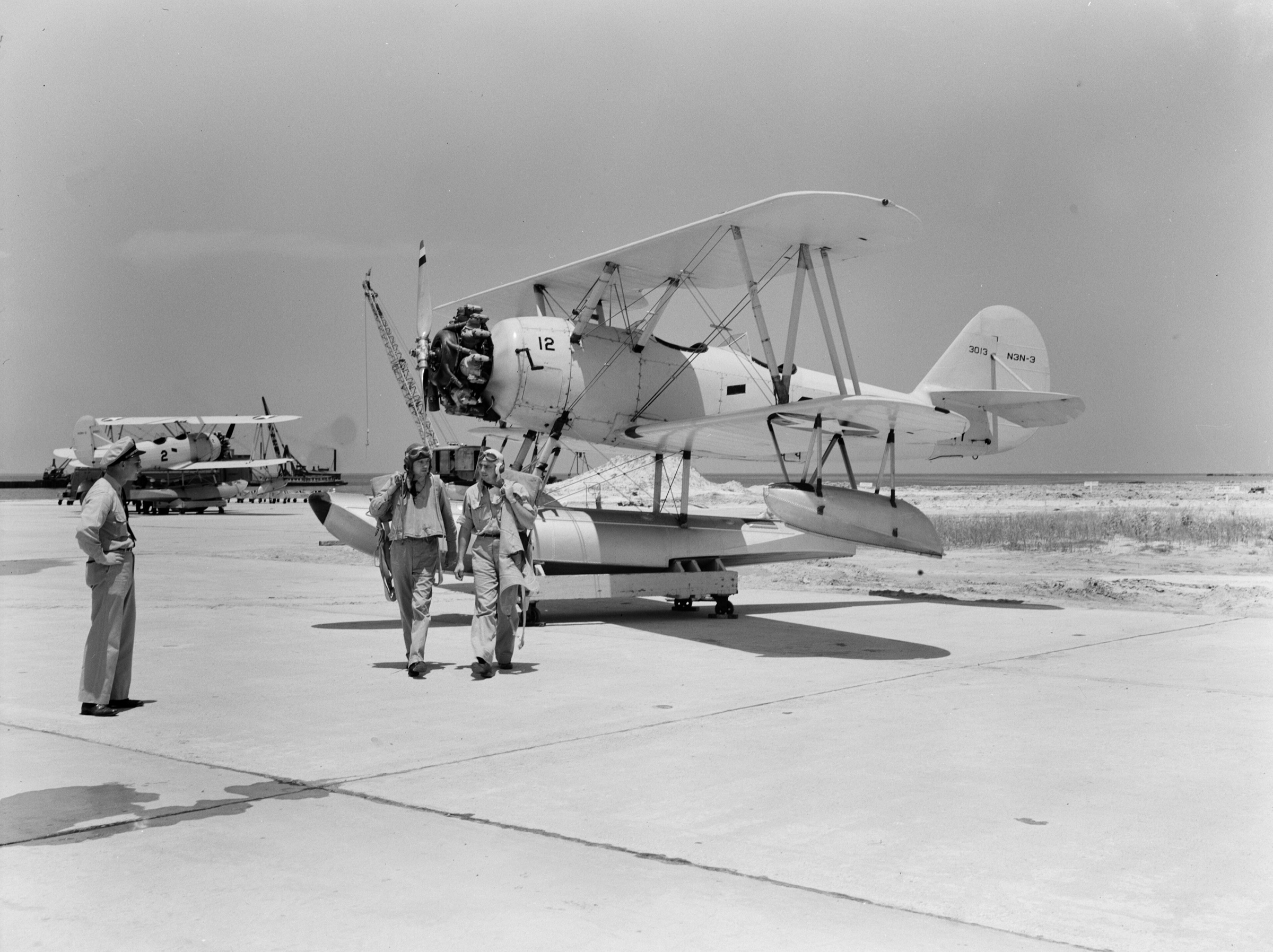
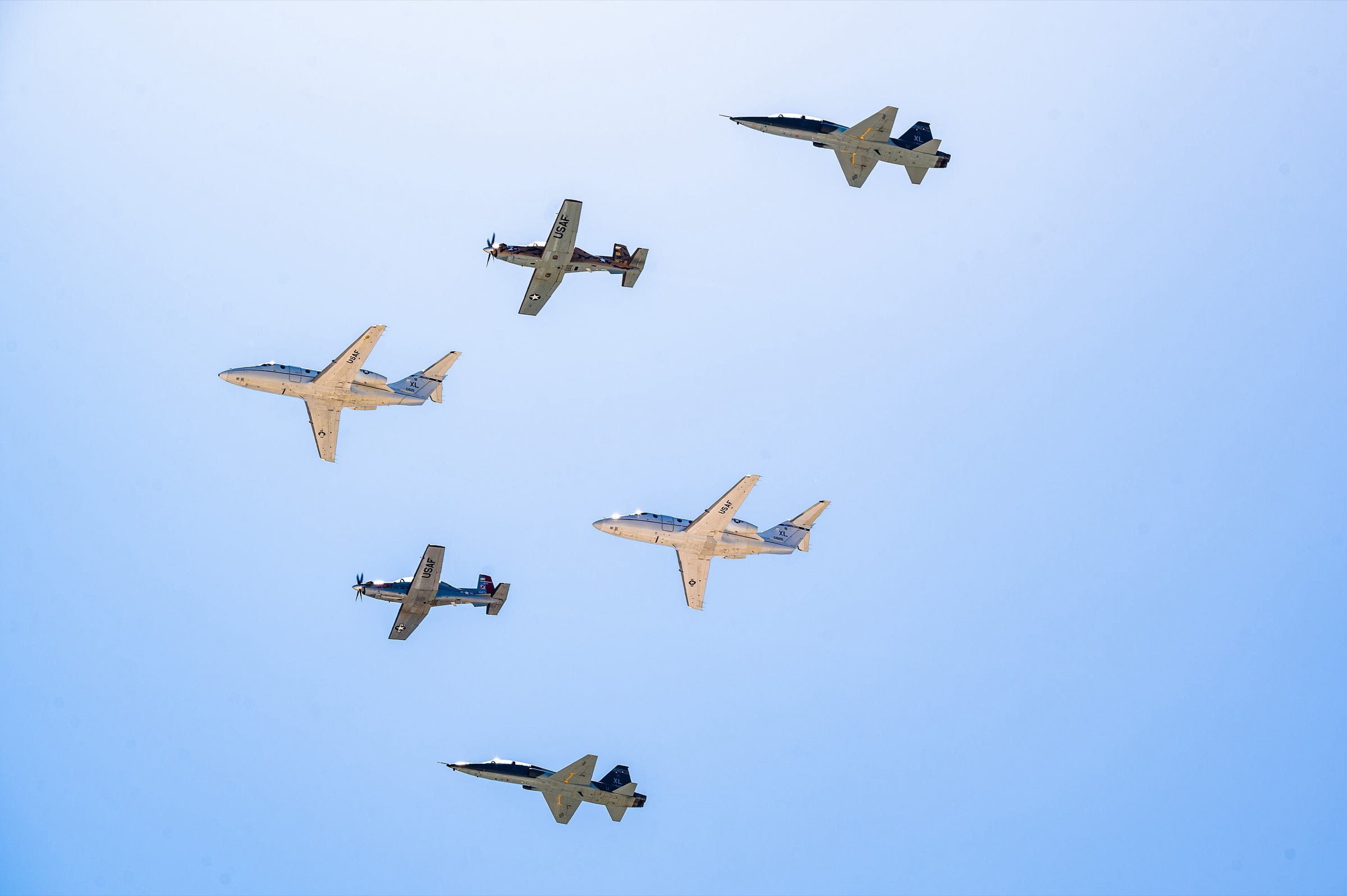
Photos: N3N-3s at NAS Corpus Christi, August 1942, U.S. Office of War Information, Library of Congress (fsa.8b07756), public domain, via Wikimedia Commons; the tail of the airplane reads N3N-3. Six U.S. Air Force aircraft perform a flyover at Laughlin Air Force Base, Texas, March 9, 2024, U.S. Air Force photo by Airman 1st Class Keira Rossman, public domain. The appearance of U.S. Department of Defense visual information does not imply or constitute DoD endorsement.